Saturday, June 12, 2010

Lexus LF-A Roadster Concept, 2008

Lexus LF-A Roadster Concept, 2008


The LF-A Roadster is based on the sturdy yet lightweight carbon-fiber and aluminum body used for the LF-A coupe, which helps maintain the structure's strength and rigidity even without a top.

The LF-A Roadster is powered by a high-revving V10 engine that approaches 5.0 liters in displacement. The V10, capable of more than 500 horsepower and test-track speeds greater than 200 mph, is mounted in front of the passenger compartment but behind the front-axle centerline in what the LF-A's engineers refer to as a "front-mid" configuration.
The engine is connected via a torque tube and propeller shaft to a transaxle that is controlled by paddle shifters. The torque tube is a structural member that adds rigidity to the drivetrain and chassis while also reducing vibration.

Styling is rooted in the Lexus L-Finesse design philosophy, conferring the LF-A Roadster's front end with a compact, low-profile, aerodynamic shape. Like its coupe counterpart, the LF-A Roadster stands just 48 inches tall, but the Roadster configuration adds a speed adaptive rear wing.

These grilles vent the heated air from the car's two rear-mounted radiators into the LF-A Roadster's aerodynamic wake. The radiators are fed cool air by two large intake ducts mounted just above the rear wheel wells. This aft radiator positioning not only allowed the designers to keep the car's front profile low and tight but also aided the LF-A's chassis engineers in their search for optimal weight distribution.

The front tires are 265/35R20s, while the rears are 305/30R20s. Like the LF-A coupe, the brakes consist of 14.2-inch cross-drilled, vented discs up front, and 13.6-inch cross-drilled, vented discs at the rear. The front brake calipers are six-piston units and the rear calipers use four pistons each.
READ MORE - Lexus LF-A Roadster Concept, 2008

Thursday, June 10, 2010

Dacia Logan, 2009

Dacia Logan, 2009


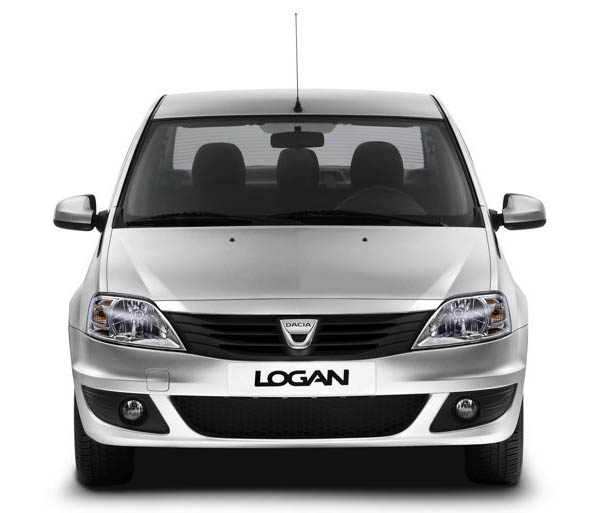
New Dacia Logan introduced across the majority of Western European markets from July 2008. In most cases, its entry level price remains unchanged, making it a more appealing proposition than ever.

More contemporary looks
New Dacia Logan stands out as a modern saloon with more contemporary exterior lines which reflect its robust, quality build. The grille, which first appeared on Dacia Sandero, is bigger and features the brand's new logo, plus a chrome upper trim as standard (except entry level version). The new front bumper is flush with the bodywork for a more integrated, harmonious feel, while the headlights are bigger and the fog lamps come with elegant carbon colour surrounds (depending on version).

The rear design of New Dacia Logan has been updated, too. The design of the new boot lid, which can be trimmed with a lower chrome strip, is more streamlined and its lines have been carried over to the revised rear lights. The rear bumper, too, is now flush with the bodywork and incorporates reflectors and a towing hook complete with concealing cap.

An even more pleasing interior
New Dacia Logan sets out to be even more appealing than ever. The new dashboard, which first appeared on Dacia Sandero, is modern and functional, while the design of the door panels also contributes to the cabin's modern feel thanks to their more practical pull handles and elegant trimming (depending on version). The upgrade in range has seen the introduction of two finishes for New Dacia Logan's dashboard, plus a choice of four upholsteries (depending on countries).

Drivers will appreciate the practical controls, and special care has gone into ensuring that all dashboard information is easy to read. The driving environment itself has been made even more comfortable and driverfriendly thanks to a new driver's seat adjustment control (depending on version) and a height-adjustable steering column (depending on version). Rear visibility has been improved through the fitment of a comma-type central rear headrest and large format door mirrors. These have been carried over from Dacia Logan MCV and are standard equipment on New Dacia Logan.

An exceptionally roomy interior
New Dacia Logan's generous dimensions ensure outstanding cabin space which continues to be unmatched in the three-volume saloon category of the B-Entry segment. Indeed, its size is more akin to C-segment norms, since the newcomer's overall length has been increased to 4,290mm (up 40mm compared with the previous version Logan), while its width is 1,740mm. Cabin space is one of New Dacia Logan's most salient features and three tall passengers (more than 1.90m in height) can be accommodated comfortably in the rear thanks to rear headroom of 873mm. Rear shoulder room is a remarkable 1,428mm too, a figure more readily associated with larger saloons. Last but by no means least, the boot volume of 510 litres is unequalled by any of New Dacia Logan's rivals in its category and the boot layout itself permits loads of very different shapes and sizes to be carried with ease.

The accent on safety
New Dacia Logan features the same safety features and equipment that enabled the model to achieve a threestar Euro NCAP crash test rating.

New Dacia Logan can be equipped with the latest generation Bosch 8.1 ABS complete with electronic brakeforce distribution (EBD) and emergency brake assist (EBA), a new feature which debuted on Dacia Sandero. The latter detects when the driver brakes in an emergency situation and acts on the hydraulic circuit to increase the effectiveness of the ABS by applying maximum pressure the instant the driver hits the brakes.

Front and rear tracks of New Dacia Logan have been widened 7mm either side, which reinforces the roadholding capabilities of the vehicle.

New Dacia Logan features a new honeycomb structure for the dashboard which reduces the severity of impact to the knees. In addition to the materials it employs, the dashboard's very design takes safety into account thanks to the curves of its lower section which match the form of the tibia, enabling impact loads to be spread out evenly in case of contact. The driver and front passenger also benefit from further lower limb protection thanks to underfoot padding.

All New Dacia Logan's seats are equipped with three-point seatbelts and headrests, while the new car is delivered as standard with two controlled-deflation airbags (depending on countries), driver and front passenger, the pressure of which diminishes following deployment in order to limit the load applied to occupants.

A comprehensive range of proven powerplants
New Dacia Logan comes with the same proven petrol engines and diesel engine that have contributed to the Dacia range's success.

The 1.4 MPI 75hp, 1.6 MPI 90hp and 1.6 16V 105hp all comply with the criteria of cost, robustness and ease of maintenance that are a feature of the Dacia brand. They combine generous torque from low revs with thrifty fuel consumption: 7.0, 7.2 and 7.1 litres/100km respectively.

The 1.5 dCi stands out as a benchmark in the diesel engine field thanks to the use of such advanced technologies as second-generation common-rail direct injection which delivers both high performance and extremely low fuel consumption. The 1.5 dCi is available in 70hp form and a punchier 85hp version, while CO2 emissions of 120g/km point to the 1.5 dCi 70hp and 1.5 dCi 85hp engines' ecological credentials.
READ MORE - Dacia Logan, 2009

Wednesday, June 9, 2010

Citroen C4 Picasso, 2007

Citroen C4 Picasso, 2007


The 5 seat C4 Picasso slips naturally into Citroën's compact MPV range between the established, best-selling Xsara Picasso and the award-winning seven seat version, which will now be known as the Grand C4 Picasso. With three compact MPVs and the full-size C8 people carrier, Citroën now boasts the broadest MPV range in its history.

The new 5 seat C4 Picasso benefits from the same forward thinking that shaped the design of the recently launched Grand C4 Picasso, with outstanding all-round visibility, a light and airy interior, leading cabin and boot space, incorporating a new version of Citroën's Modubox folding trolley, and the use of high quality materials. The easy-to-use and flexible interior lay-out combines with the uncluttered interior space and the highest levels of comfort to ensure that travelling is a pleasurable experience.

The interior of Citroën's newcomer is refreshingly light, with outstanding visibility provided by the huge windscreen, slim pillars and optional panoramic sunroof. Artificial lighting also plays a major role with the availability of various useful features, such as automatic welcome lights under the door mirrors, a portable torch in the boot and reading lights on the back of the front seats, all designed to make journeys easier.

The exterior dimensions (4.47m long, 1.83m wide and 1.66m tall) give the C4 Picasso an extremely spacious interior. This feeling of space is enjoyed by all passengers, with those in the front benefiting from the simple, uncluttered design of the dash, and those in the back from three individual, full-size seats and a flat floor. The innovative seating design, first seen in the Grand C4 Picasso, allows the rear seats to be quickly and easily folded flat into the floor.

When all 5 seats are in use, the new model leads the class with 500 litres of boot space underneath the luggage cover, extending to a maximum 1,734 litres once the rear seats are folded down. Helping to keep the boot tidy, the five seat C4 Picasso can also be equipped with a new version of Citroën's renowned Modubox. This innovative, removable trolley makes it easy to divide boot space and to transport objects outside of the vehicle.

The new 5 seat C4 Picasso provides a relaxing journey for all occupants. Suspension comfort can be further enhanced by the optional pneumatic rear suspension, while laminated acoustic side windows can be specified to make it even quieter inside. An automatic electronic parking brake and Hill Start Assist are fitted as standard and make everyday driving easier.

Thoughtful extras such as individual air flow controls for back seat passengers, an air quality sensor and a scented air freshener can all add to the pleasant on board atmosphere. A high quality stereo system and folding video screens in the back of the front seats are also available to keep passengers entertained.

Which scored five stars in Euro NCAP tests, the new C4 Picasso meets the most stringent criteria for occupant protection, offering the likes of four Isofix seats, audible seat belt warnings for all seats and seven airbags as standard.
READ MORE - Citroen C4 Picasso, 2007
Related Posts Plugin for WordPress, Blogger...